
Last Friday 22 May was a student free day which hopefully provided some valuable rest time for all our students. On this day, all staff engaged in Professional Learning regarding student wellbeing at Parade College. Our staff engaged in an energising and uplifting professional development session led by Martin Heppell, Partner and Lead Facilitator with The Resilience Project. Martin is known for his trademark energy, humour, and powerful storytelling and he delivered exactly that.
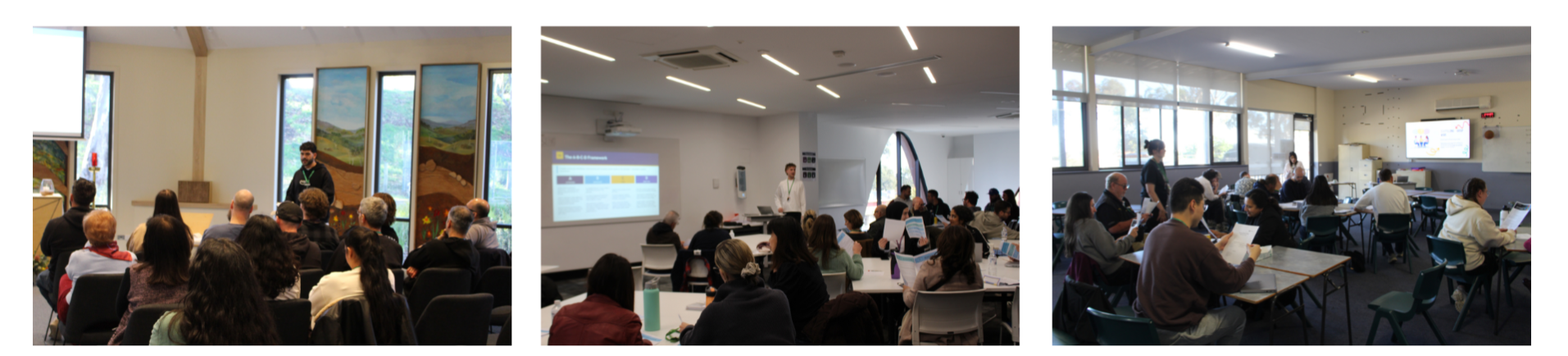
Martin’s session, 'Building Relationships, Respect & Resilience: Supporting Students to Thrive', focused on how embracing our imperfections and showing vulnerability can strengthen relationships across our school community. He reminded us that connection is at the heart of wellbeing, and that when we model authenticity, students feel safer, more supported, and more willing to take positive risks in their own learning. After the keynote, the College led various student wellbeing workshops which are illustrated below.
An increasing number of students are engaging with a new online platform called Omoggle, raising growing concerns within schools and wellbeing communities. Omoggle is a recently launched platform that hosts live, 1v1 video “face-off” battles, where users compare appearances and are ranked in real time by artificial intelligence. The system evaluates who has the “better” facial structure - a practice referred to online as “mogging.”
This platform sits within a broader online trend known as “looksmaxxing.” Originally a niche internet subculture, looksmaxxing focuses on maximising physical attractiveness through intense self-improvement. While it may appear harmless on the surface, it has increasingly moved into mainstream social media spaces, where it is gaining popularity - particularly among teenage boys.
Although some students may view Omoggle as entertainment, the platform and its associated culture present significant risks:
Awareness is key. Families are encouraged to maintain open conversations with their children about the online platforms they use and to promote a balanced understanding of self-worth that extends beyond appearance. Reinforcing positive identity, digital literacy, and safe online habits can help protect students from the pressures associated with trends like Omoggle.
Schools will continue to address these issues through wellbeing and digital citizenship programs, supporting students to navigate online environments safely and confidently.
For parents seeking further information, the following article may be helpful:
AI Face Rating Apps and “Mog Battles”: What Parents and Teachers Need to Know about Omoggle - Cyber Safety Project


 back
back
